
Stainless-steel gas pipelines
Planned routing, supports, tube bends and compatible connections for clean distribution to laboratory benches, utility panels or instruments.
Route planning · SS tubing · supports · identificationSymtek Scientific configures and installs stainless-steel gas pipelines, pressure regulators, gauges, valves, gas filters and purifiers, flow-control panels, manifolds and instrument connections for analytical laboratories and industrial quality-control facilities.
Each line is planned as a complete service. Pressure regulation, monitoring, filtration or purification, isolation, flow control, stainless-steel tubing, identification and the final connection are matched to the gas duty and analytical equipment.
This path is illustrative. The actual component sequence and configuration depend on gas compatibility, inlet conditions, downstream requirement, flow demand, instrument connection and site layout.
Component choice and layout are reviewed together so the pipeline, controls and point-of-use connection suit the stated gas service, operating conditions, cleanliness objective and maintenance access.
Planned routing, supports, tube bends and compatible connections for clean distribution to laboratory benches, utility panels or instruments.
Route planning · SS tubing · supports · identificationSingle- or multi-service assemblies that organize independent gas paths, monitoring, adjustment and access in a practical panel layout.
Independent lines · organized controls · service accessPressure-control and indication components selected against the available inlet condition, required downstream condition, flow duty and gas compatibility.
Primary control · point-of-use control · pressure indicationLine-conditioning components reviewed for the stated gas, contaminants of concern, downstream cleanliness objective and expected operating duty.
Gas-specific selection · replaceable elements · service planningIsolation, distribution and connection hardware arranged for safe operation, clear service paths and the required tubing and equipment interfaces.
Isolation · branching · tube fittings · connectionsClearly identified outlets, local controls where required and final connections coordinated with the receiving equipment information.
Bench outlets · equipment drops · final connections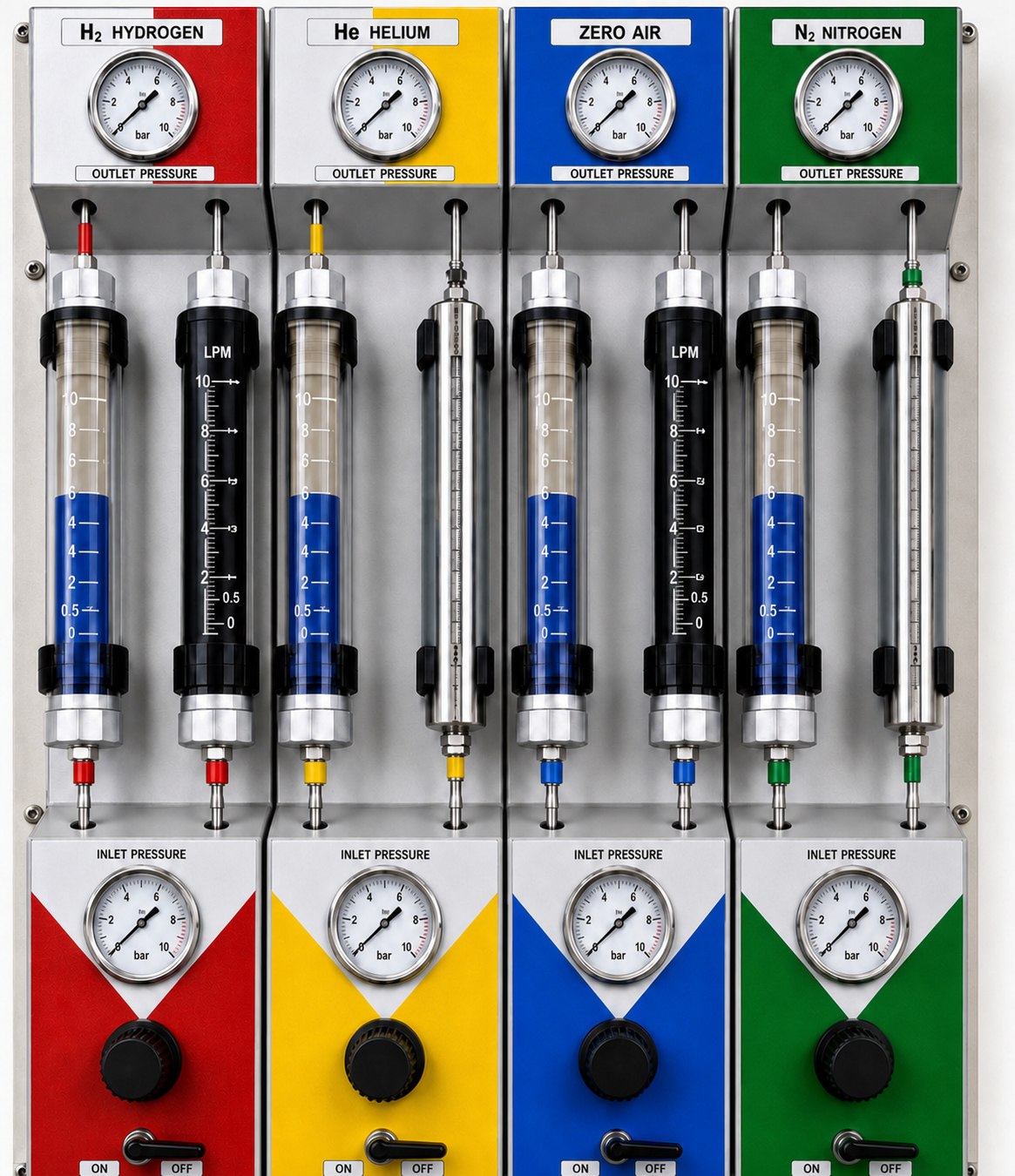
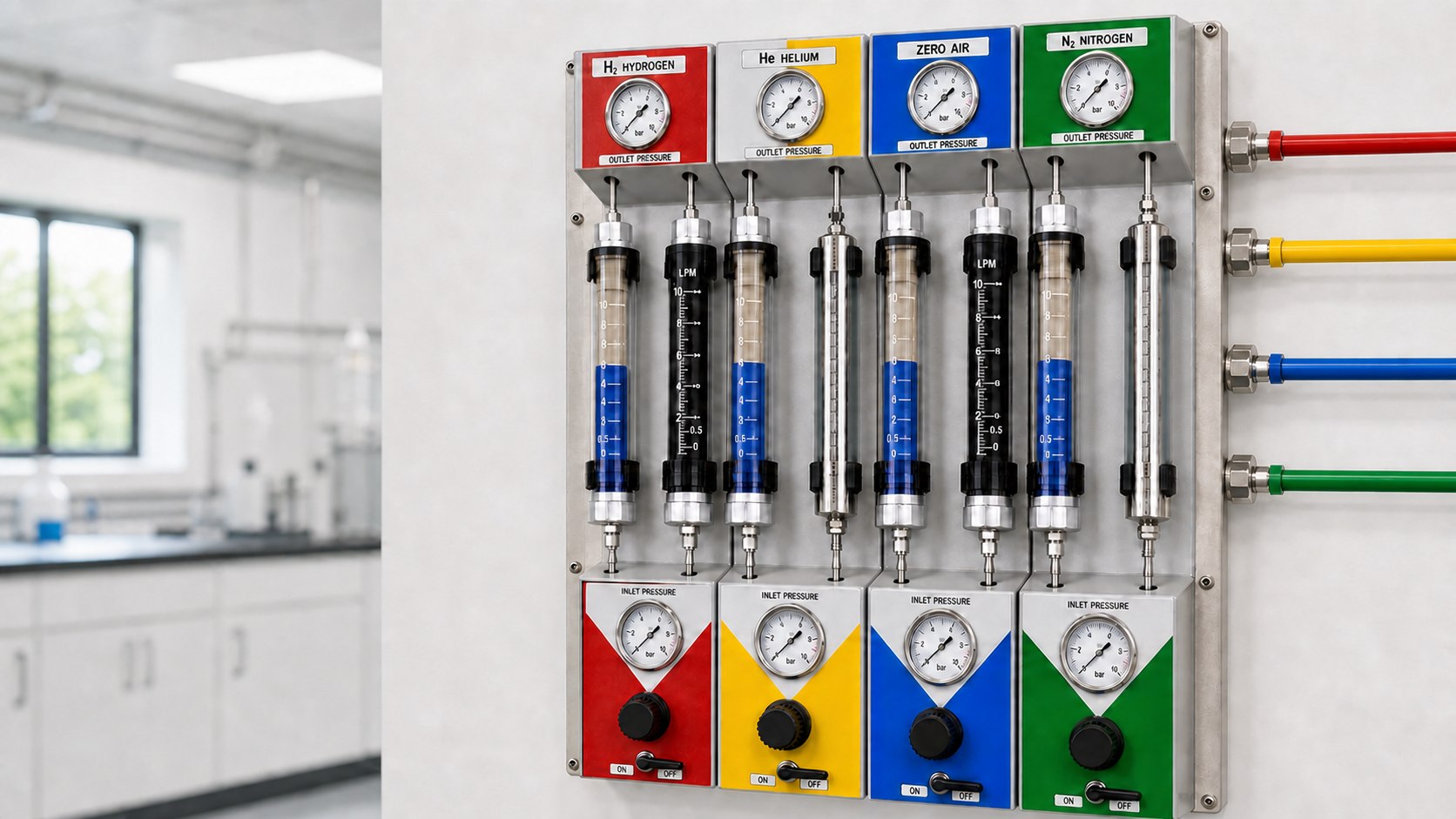
A multi-line gas panel organizes commonly used analytical-gas services while keeping their flow paths independent. In this representative arrangement, the channels appear from left to right as H₂, He, Zero Air and N₂, with pressure indication, adjustment and line-conditioning hardware arranged for clear operation.
Pressure control and gas conditioning influence what reaches the instrument. Symtek reviews the available service condition, downstream requirement, gas compatibility, expected demand and contaminants of concern before proposing the line components and their sequence.
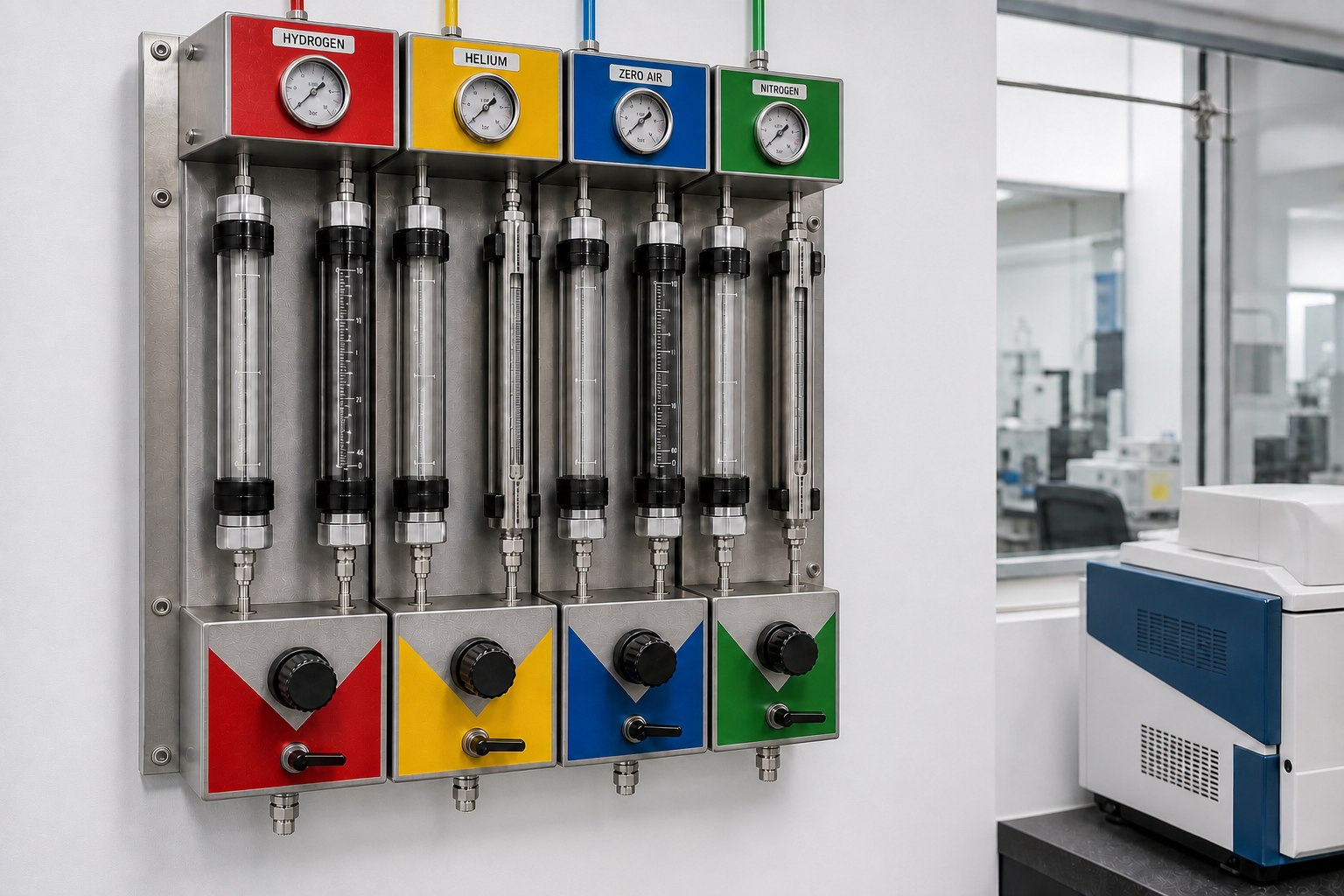
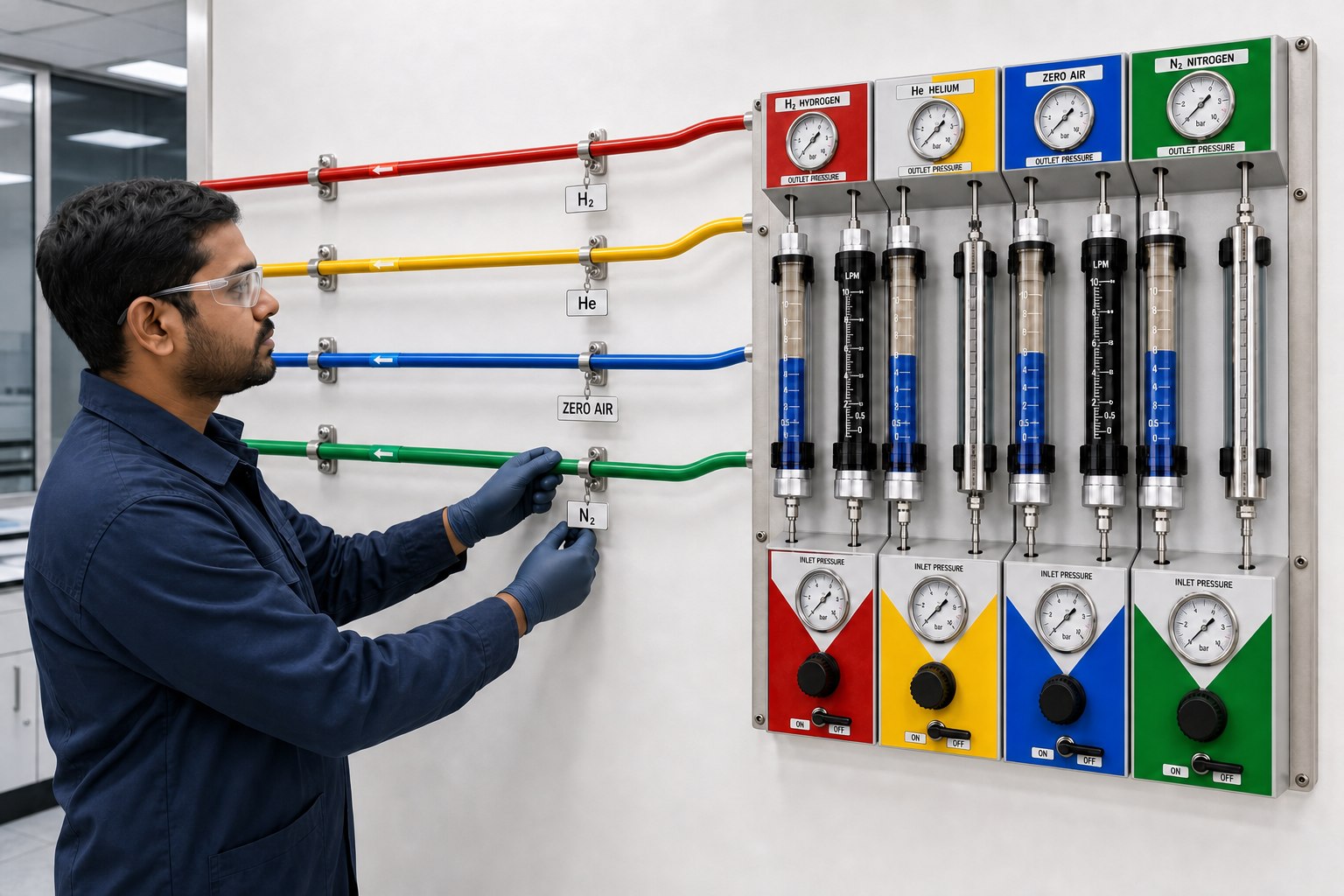
The panel is only one part of laboratory gas distribution. Tubing routes, supports, access, bends, connection methods, direction marking and point-of-use labels are planned together so each line can be followed from entry to destination.
The same basic pipeline components can serve very different duties. Gas identities, instrument demand, operating pattern, contamination sensitivity, room layout and expansion plans are considered for each application.
Dedicated carrier, fuel, oxidant or make-up gas routes for chromatography instruments, configured from the actual instrument utility information.
Regulated and identified gas services for instruments that require stable gas delivery at their specified point-of-use condition.
Organized gas panels and distribution routes for analytical areas where equipment access, line identification and documented handover are important.
Gas distribution for laboratory and at-line analytical equipment supporting material, process or finished-product testing.
Flexible routing and point-of-use planning for evolving instrument layouts, multiple work areas and anticipated future connections.
Clearly identified gas services for multi-instrument laboratories, with component and route selection based on the methods and equipment in use.
See how these systems support different laboratories and facilities in Industries & Applications.
A structured installation process connects equipment selection with the real route, installation conditions and verification plan.
Review gas identity, purity needs, available inlet conditions, outlet pressure and flow, points of use and instrument connections.
Consider the gas-service entry point, tubing distance, access, supports, utilities, work-area constraints and point-of-use locations.
Define panels, regulators, filters or purifiers, valves, fittings, tubing and points of use for the quotation or approved drawing.
Mount the specified assemblies, route and support tubing, and complete the identified distribution and instrument connections.
Apply project-approved gas identification, flow direction and connection labels so each route can be traced.
Complete the specified pressure, leak-integrity, purge, functional or other checks and provide the applicable line and handover information.
A useful first enquiry does not need a finished design. The following information helps Symtek review the likely pipeline routes, controls, conditioning components and points of use.
Yes. Existing pipelines, panels, regulators, filters, valves and points of use can be reviewed to define compatible new work or an upgrade. Reuse, modification and verification requirements are determined after technical and site review.
Yes, those four services can be discussed as a representative analytical-gas configuration. The final panel depends on the available inlet conditions, required pressure and flow, gas compatibility, cleanliness or purity objective, filtration or purification duty and instrument needs.
No. The colors shown on this page distinguish the illustrated lines only. Final identification uses gas names, flow-direction markers and tags or colors confirmed for the project and applicable site requirements.
Selection depends on the gas service, contaminants to be controlled, required downstream condition, flow duty, pressure, materials compatibility and replacement or maintenance expectations. Exact performance is confirmed from the approved component specification.
The test and commissioning plan is project-specific. Depending on the approved work, it may include pressure or leak-integrity checks, purge-related activities, functional checks, line identification and applicable handover records. The method and acceptance requirements are confirmed before installation.
Future expansion can be considered during route and distribution planning when expected gases, locations and demand are known. Any reserved capacity or future connection still requires technical and safety review before use.
Stainless-steel tubing can provide a robust, clean and maintainable distribution route when the grade, size, fittings, preparation and installation method are suitable for the gas and application. The final material and connection method are selected from the actual service requirements.
Pressure-control and monitoring points can be arranged at different locations when the operating requirement supports that approach. The number and type of regulators, gauges and isolation valves depend on the inlet condition, route, demand, receiving equipment and operating practice.
Useful information includes the Zero Air source condition, instrument requirements, expected demand, route length, point-of-use connection and any stated cleanliness or contaminant-control objective. These details guide tubing, pressure control and conditioning-component selection.
For general service, support and website questions, visit the Symtek FAQ.
Share the available laboratory layout, gas list and instrument information. Symtek Scientific can review the stainless-steel pipeline, panel, regulator, filter or purifier, flow-control and installation requirements as one coordinated system.